Regulatory pressure
CSRD and ESRS require reporting Scope 3, where 80-90% of agri-food emissions are concentrated, and SBTi FLAG requires including land use change.
The carbon module builds on the traceability you already capture. Plot, crop, inputs, energy, transport and transformations become a per-batch report ready for ESG, customers and audits.
Try Retexcycle Origins free for 15 days. With real data, no strings attached.
CSRD and ESRS require reporting Scope 3, where 80-90% of agri-food emissions are concentrated, and SBTi FLAG requires including land use change.
Buyers, traders and retailers ask for the supplier-specific footprint for their own inventory. A credible PCF is a condition for preferred-supplier status.
With real data from your origin you stop competing against averages. Strong performance is proven with numbers and becomes a commercial advantage.
ISO 14067 and GHG Protocol with IPCC and ecoinvent factors, and LUC modelled at origin, for a footprint that withstands audits rather than inflating.
The same plot and origin data you already capture for the EUDR feed the calculation. Zero duplication: a single database for compliance and carbon.
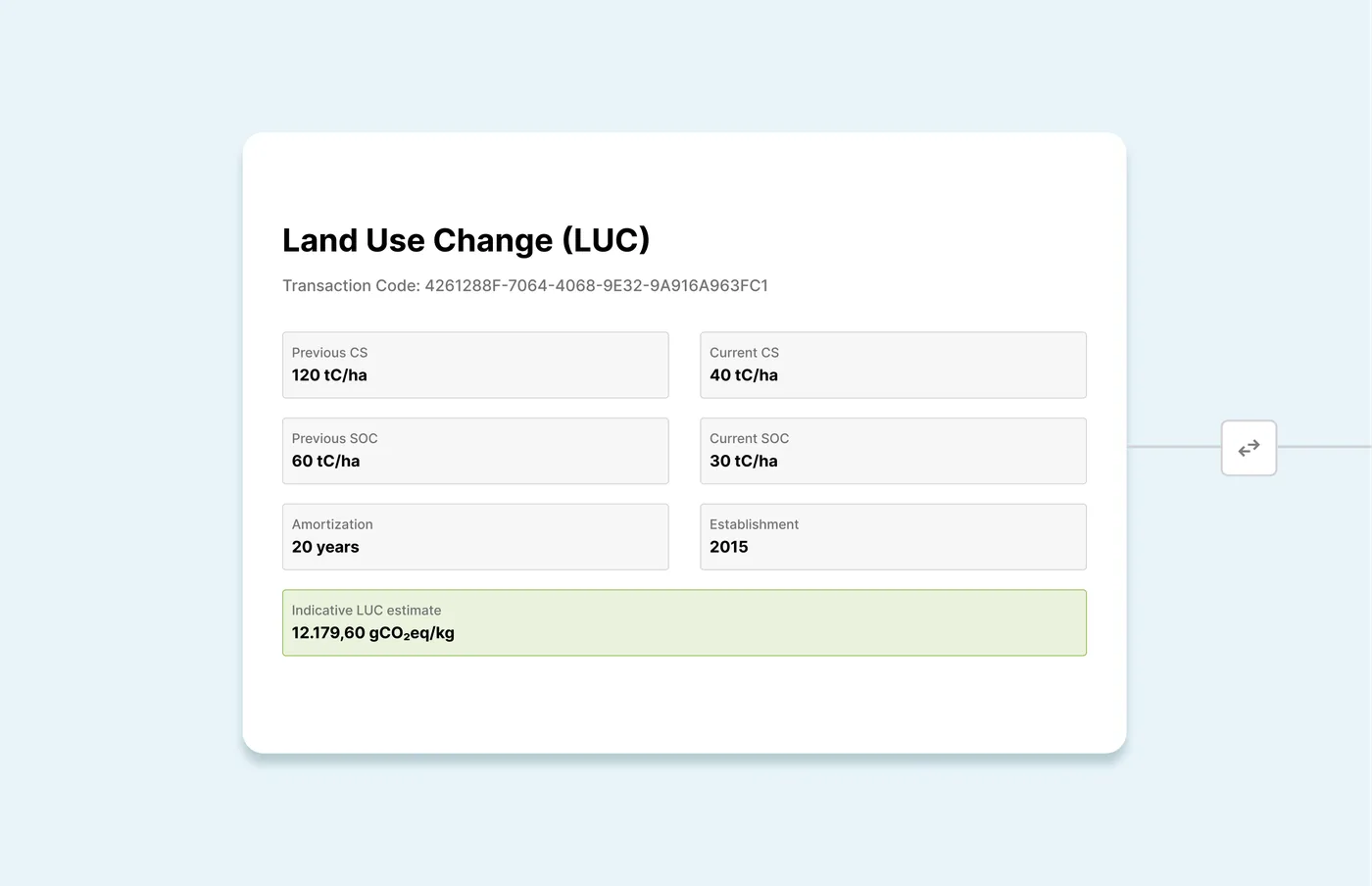
Land use change (LUC) parameters are configured so the calculation starts from your reality rather than a generic average.
Carbon stocks, amortisation period and year of establishment per plot.
The system generates an indicative estimate as soon as you define the scope.
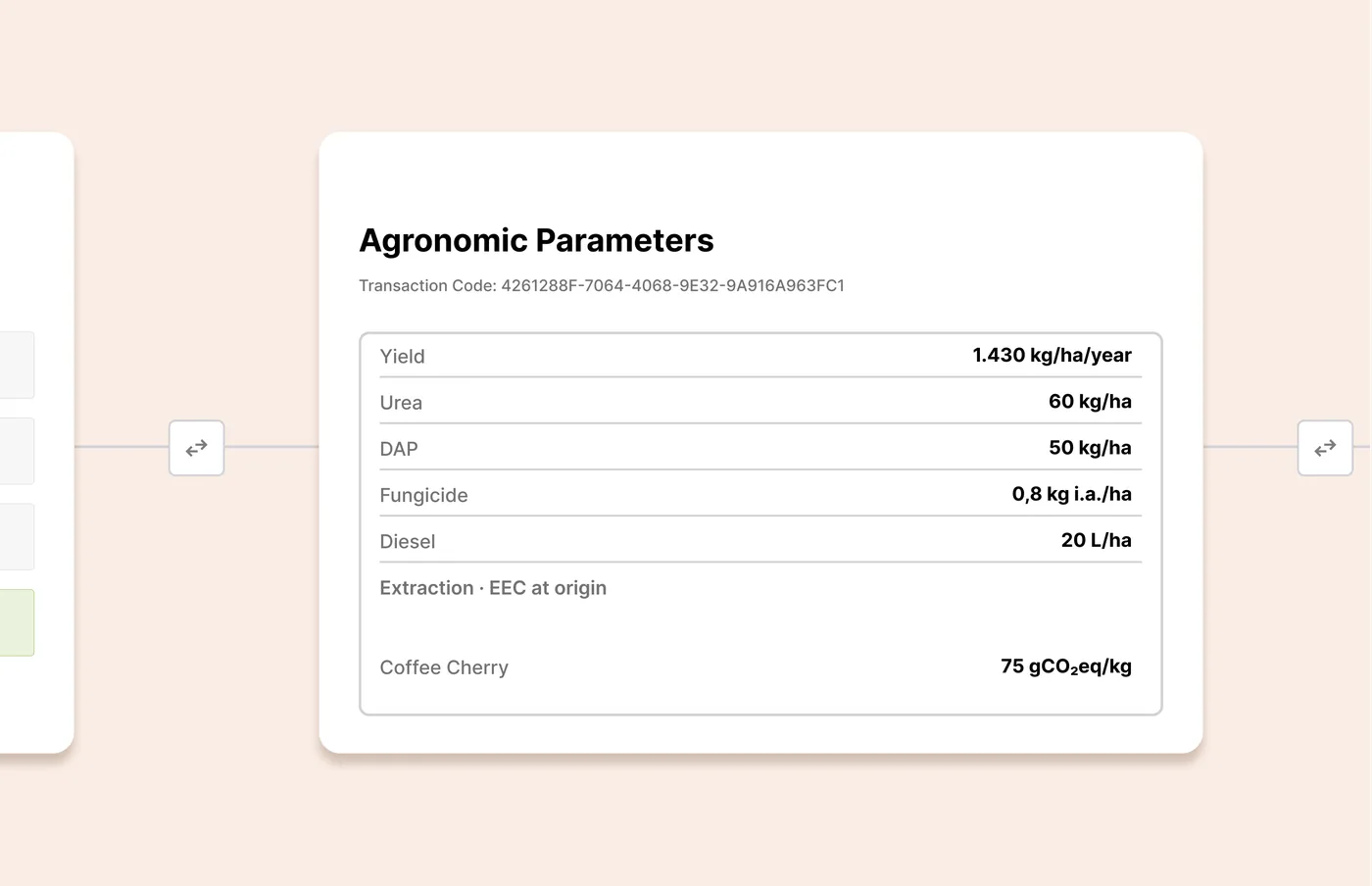
Record crop yield and agronomic inputs at origin to build an inventory that faithfully reflects your operation.
Actual productivity is recorded per plot and season.
Fertilisers, agrochemicals, diesel and origin emissions per batch.
Client data always takes priority over reference values.
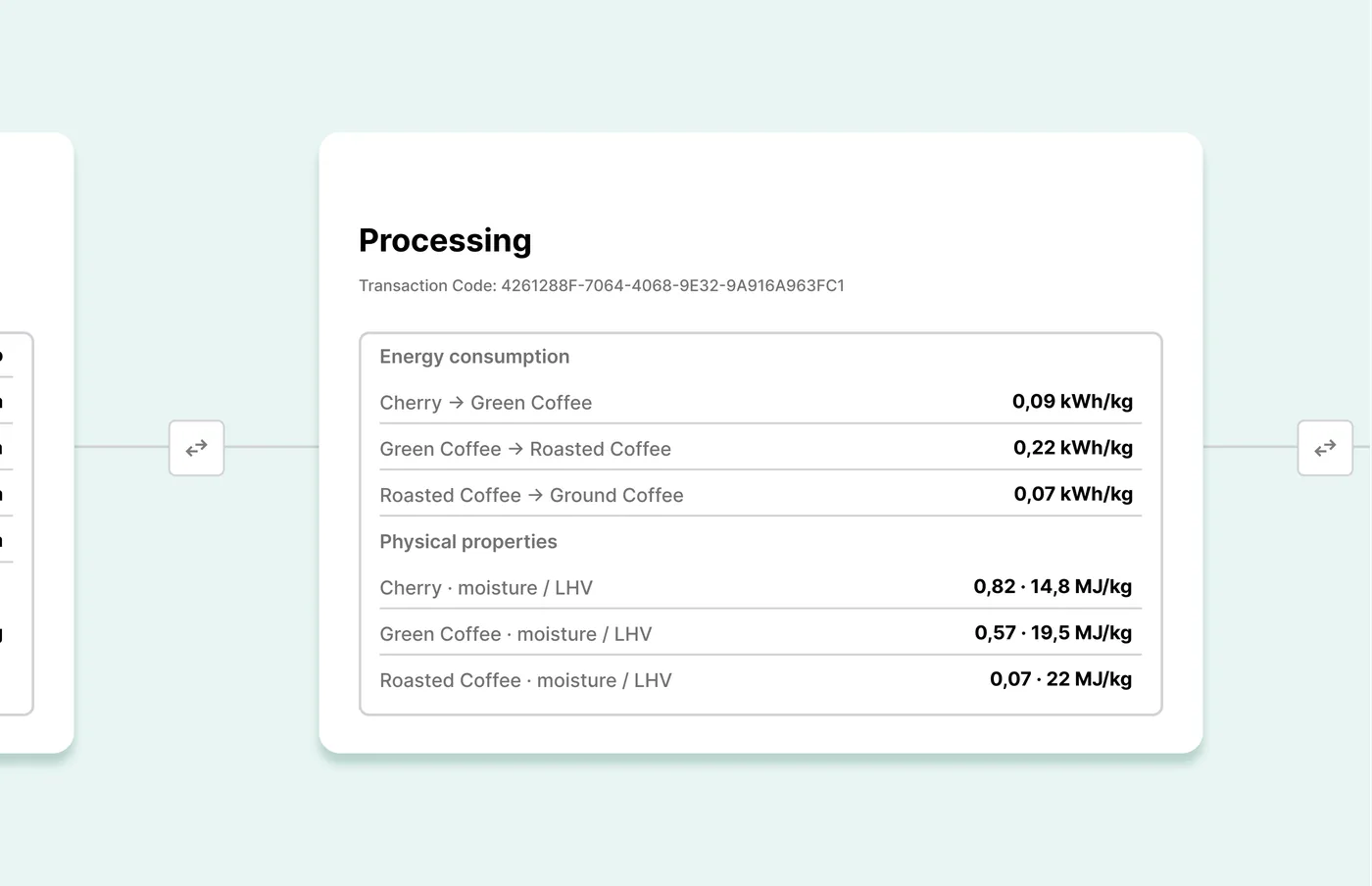
Each transformation stage contributes energy consumption and physical properties that the calculation needs to be accurate.
Capture the energy of each product transformation stage.
Moisture, calorific value and characteristics of each processed item.
Effluents and waste are recorded when the stage requires it.
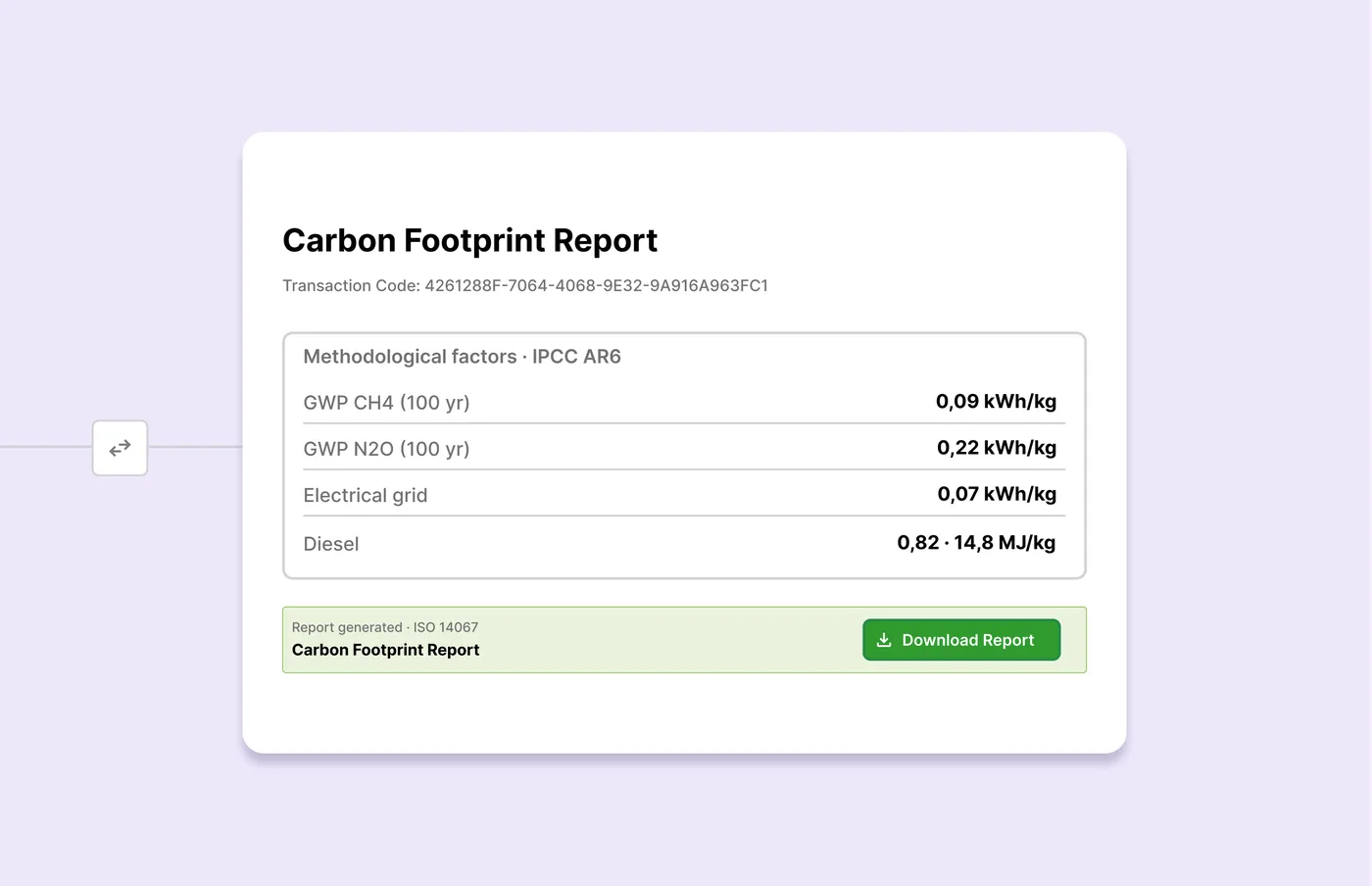
The platform applies recognised methodological factors, calculates the final PCF and generates the report ready for audits and customers.
Traceable methodology for a footprint that holds up under audit.
Final PCF ready for certifications, buyer and compliance.
The technology that makes Retexcycle the traceability platform for complex supply chains.
Connect your existing systems through an open API without forcing the producer to change the way they work.
Each batch keeps its identity, attributes, location and associated events throughout the entire chain.
The platform works with the physical consistency of the commodity, not just attached documents.
Satellite layers and interactive maps turn polygons and plots into compliance-ready evidence.
AI detects alerts, land-cover changes and anomalies to anticipate risks before declaring.
Invite your team with custom permissions. Each person sees only what they need.
We create your workspace and give your team access.
We import producers, batches and origin traceability.
A hands-on session with your team to master the platform.
We validate results with real data before scaling.
Continuous operation with support and regular improvements.
The corporate footprint measures the emissions of the entire organisation over a year (Scopes 1, 2 and 3 of the GHG Protocol). The product footprint (PCF, Product Carbon Footprint) calculates the emissions associated with a specific unit of product across its life cycle, typically "cradle-to-gate" or "cradle-to-grave". They are complementary but distinct calculations: the customer, retailer or regulator usually asks for the per-product figure, not the company aggregate. Retexcycle calculates the PCF from the real data of each batch.
The most widely used reference frameworks are ISO 14067 (product carbon footprint), ISO 14040/14044 (life cycle assessment), the GHG Protocol Product Standard and, in the EU, the PEF method (Product Environmental Footprint) with its PEFCR category rules. To communicate the result to the market, an EPD (Environmental Product Declaration) verified under ISO 14025 is commonly used. Retexcycle structures the inventory in line with these standards so the result is defensible under audit.
Generic databases (sector averages) are useful for a first approximation, but they do not reflect your real chain and produce poorly differentiated results. More and more schemes — and the European regulatory trend itself — require primary or supplier-specific data for the most relevant stages, especially in Scope 3, which usually concentrates most of the footprint. Using primary data reduces uncertainty, improves the audit score and makes it possible to demonstrate real year-on-year improvements. Retexcycle prioritises the capture of primary data per batch and supplier.
CBAM (the Carbon Border Adjustment Mechanism) requires declaring the embedded emissions of certain imported products (steel, aluminium, cement, fertilisers, etc.), and from 2026 it entails payment for those emissions. The Digital Product Passport (DPP), arriving with the ESPR ecodesign regulation, will include environmental information per product. In both cases the starting point is the same: a traceable, verifiable per-product footprint figure. Calculating your PCF properly today leaves you prepared for both requirements.
It depends on the complexity of the chain, but the greatest effort is not the calculation, but gathering and validating the data: energy and fuel consumption, raw materials and their origins, transport, losses and waste per stage. With the information organised, a PCF can be ready in weeks rather than months. Retexcycle reduces that time by structuring the capture per stage and reusing the traceability data you already collect for other purposes.
It is not always mandatory, but verification by an independent third party is what gives credibility with customers, retailers and regulators, and it is a requirement for publishing an EPD or making environmental claims without the risk of greenwashing. The forthcoming Green Claims Directive tightens this point. That is why it is advisable to calculate from the outset with traceable data and organised documentation: Retexcycle leaves the inventory and the evidence ready for the verifier to work without friction.
A personalized demo with your own origin data. No commitment.