01
Record the harvest
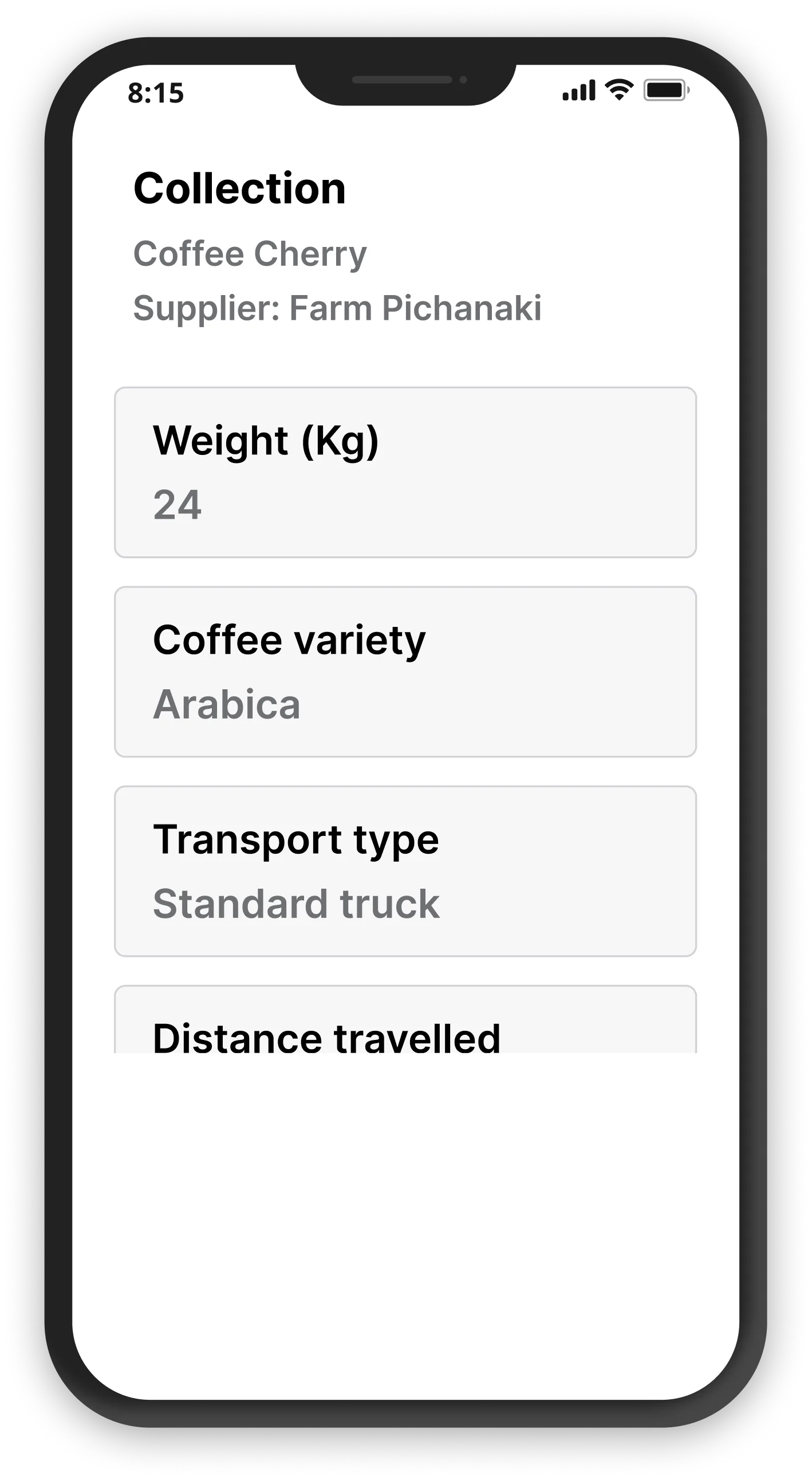
Each delivery is linked to the producer, the plot and the physical batch at the moment it happens. The data comes from the field, not from a document someone fills in afterwards.
Retexcycle Origins captures data at the farm, keeps the identity of each batch
through every transformation and generates the origin evidence your European buyer
needs to declare.
Try Retexcycle Origins free for 15 days. With real data, no strings attached.
Retexcycle covers every requirement of the regulation with real origin data. A single validated database, ready for TRACES NT.
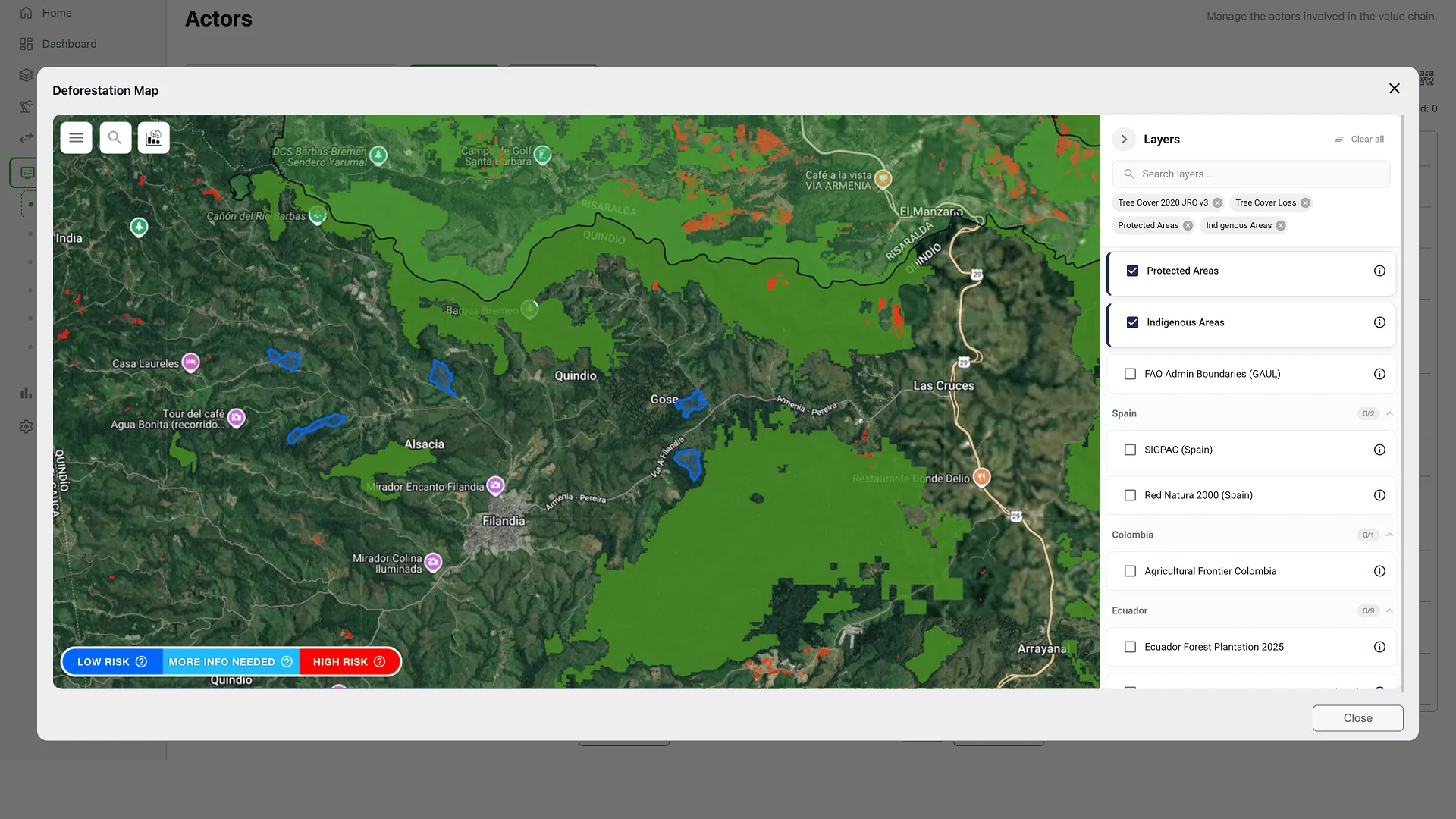
Polygons per farm and GeoJSON generated automatically.
Satellite analysis cross-referenced with over 25 data sources.
Generated from the real data of each batch and actor.
Batch identity preserved through every transformation and transfer.
Continuous balancing that verifies declared quantities match the real flow.
Sealed repository with 5-year retention, ready for audit.
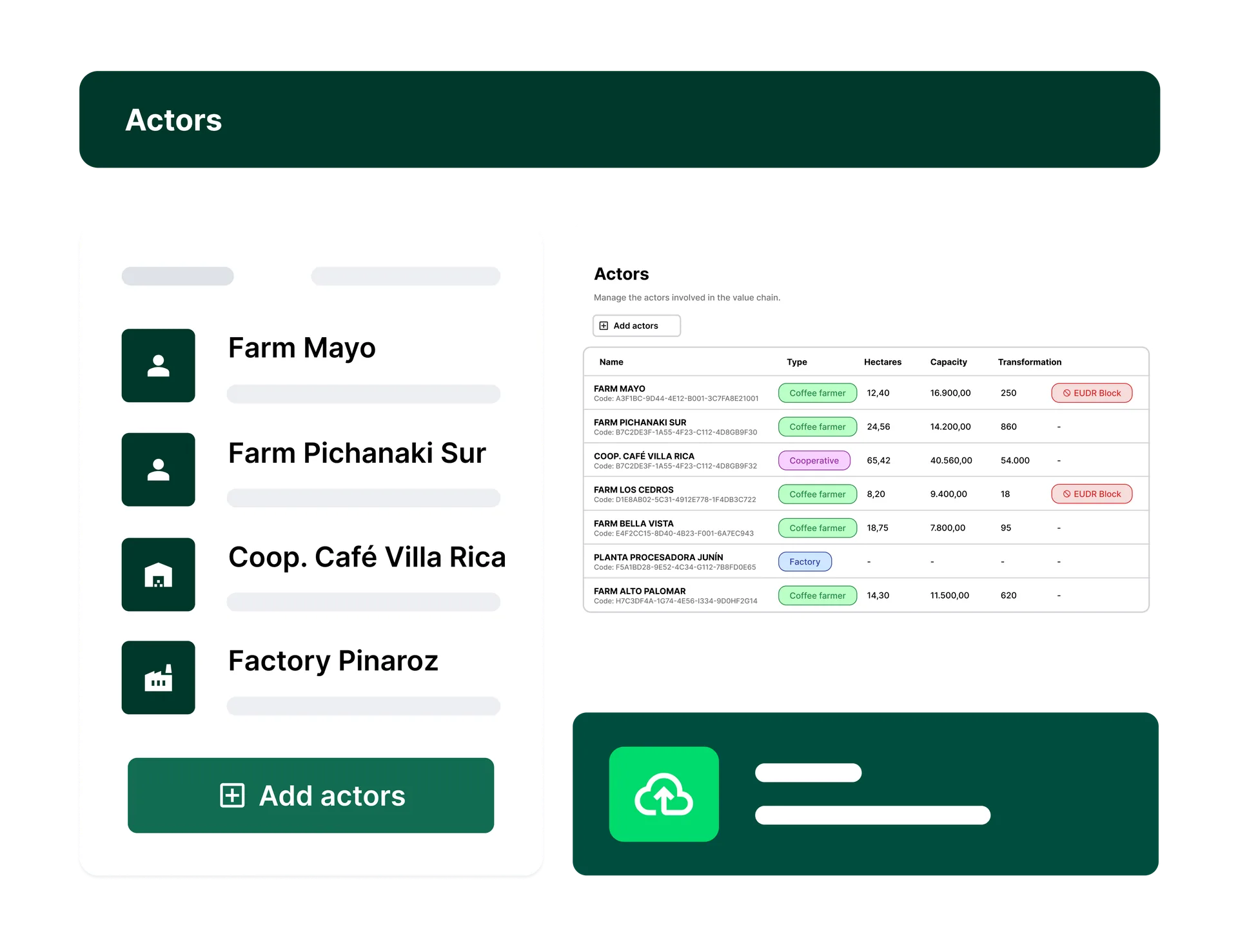
Upload producers, farms and intermediaries with their location on the map. Each plot's polygon is linked from the start, not added later. The importer receives real coordinates, not estimates provided by third parties.
Load actors from CSV, GeoJSON, KML, KMZ or Excel. Validate the data before creating them.
The exact geographic outline of each farm, not an approximate point on the map. It is the data the EUDR requires and that many solutions cannot deliver.
Producers take part with no need for apps or technical know-how.
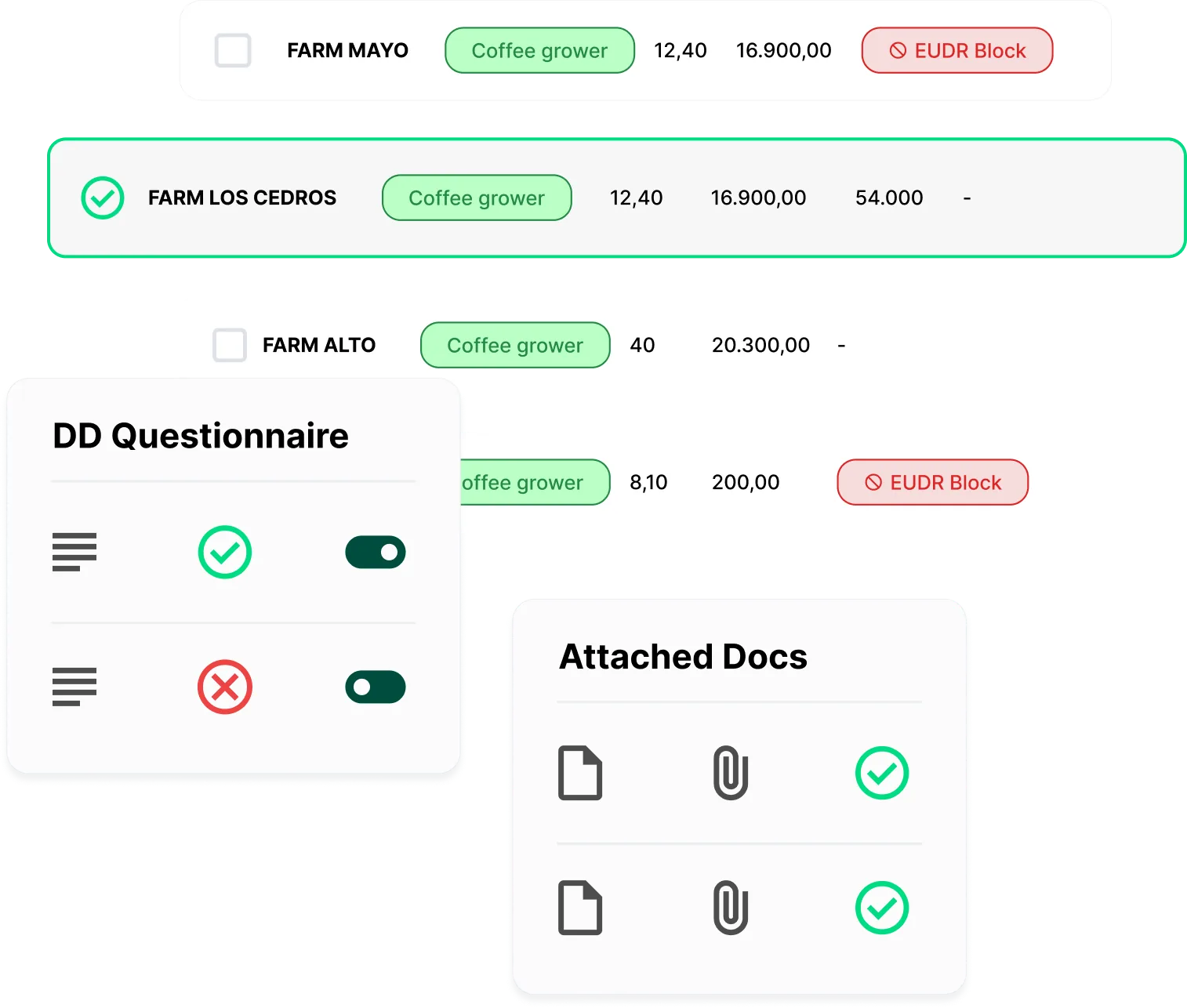
If you work with dozens or hundreds of producers, knowing who has their documents in order and who does not is the difference between declaring on time or getting stuck.
Send questionnaires to each producer and receive their answers and documents directly on the platform.
See at a glance who is ready, who has outstanding items and where the risk lies before you export.
Retexcycle Origins alerts you when a document expires or information is missing. No last-minute surprises.
Draw or import the exact outline of each plot and Retexcycle cross-references that information with satellite imagery instantly. You know which farms carry deforestation risk before your European buyer even asks.
Draw or import the outline of each farm and link it to its producer, batch and documentation. The exact geographic boundary, not a point on the map.
Retexcycle cross-references each plot with satellite imagery and confirms the state of the land before and after the date set by the regulation.
Each plot is automatically assigned its risk classification. You see at a glance which suppliers are green and which need attention before exporting.
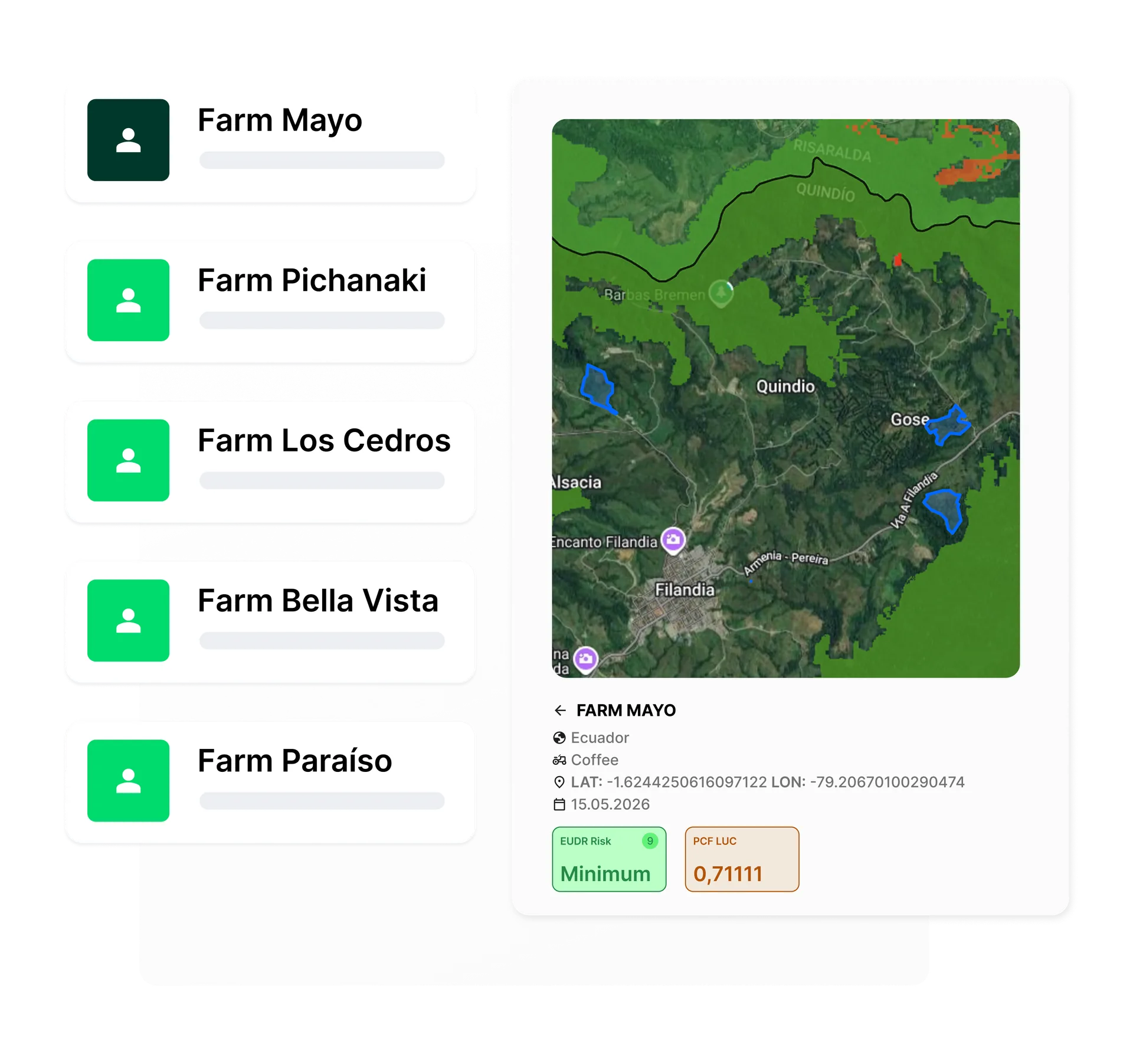
Retexcycle preserves the identity of every batch at each step of the supply chain. You know where every part comes from, in what quantities and what has happened to it. When it reaches the importer, the origin is traceable back to the farm.
Each delivery is linked to the producer, the plot and the physical batch at the moment it happens. The data comes from the field, not from a document someone fills in afterwards.
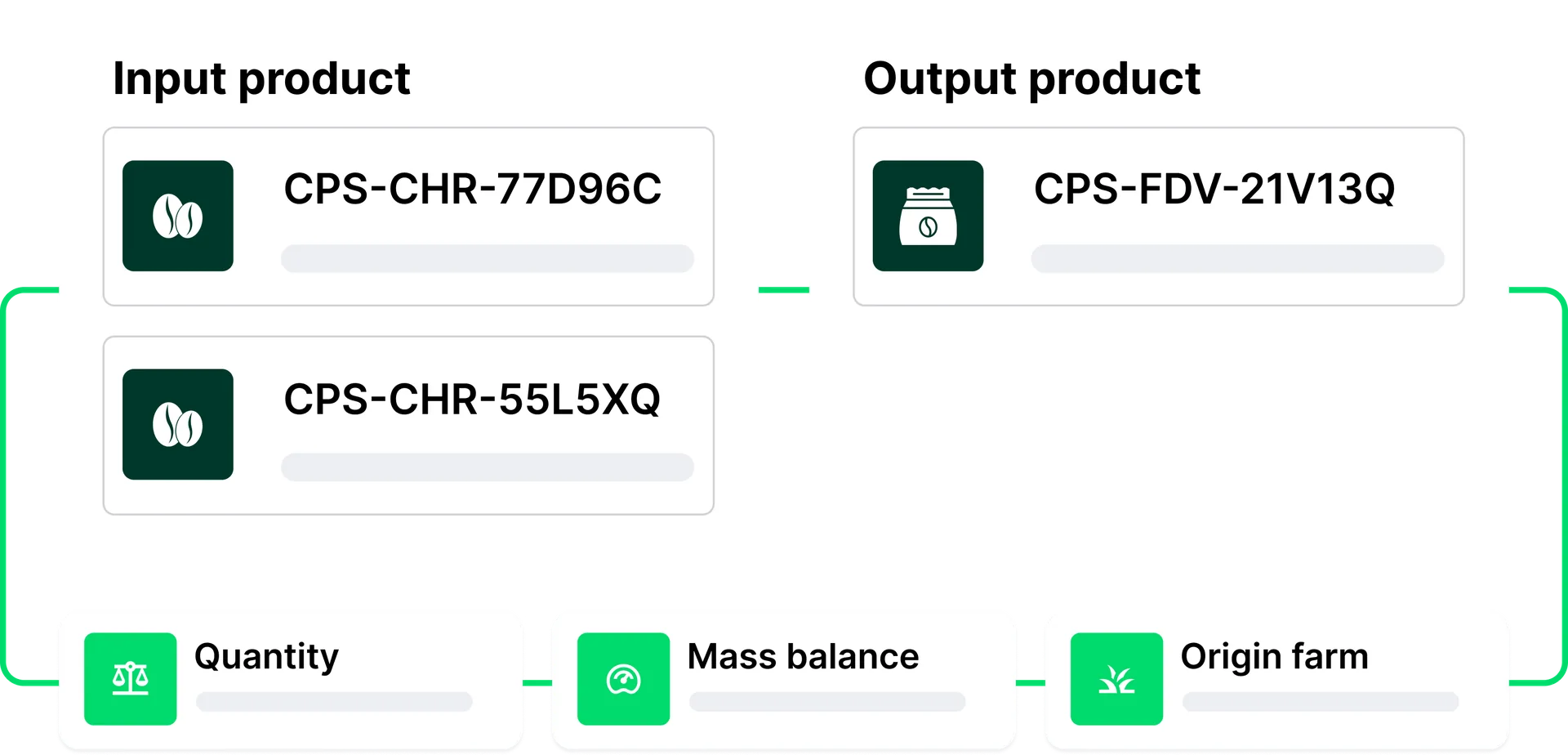
When the product is blended or processed, Retexcycle preserves the batch identity: quantities, origin and attributes. Processing does not break the chain of custody.
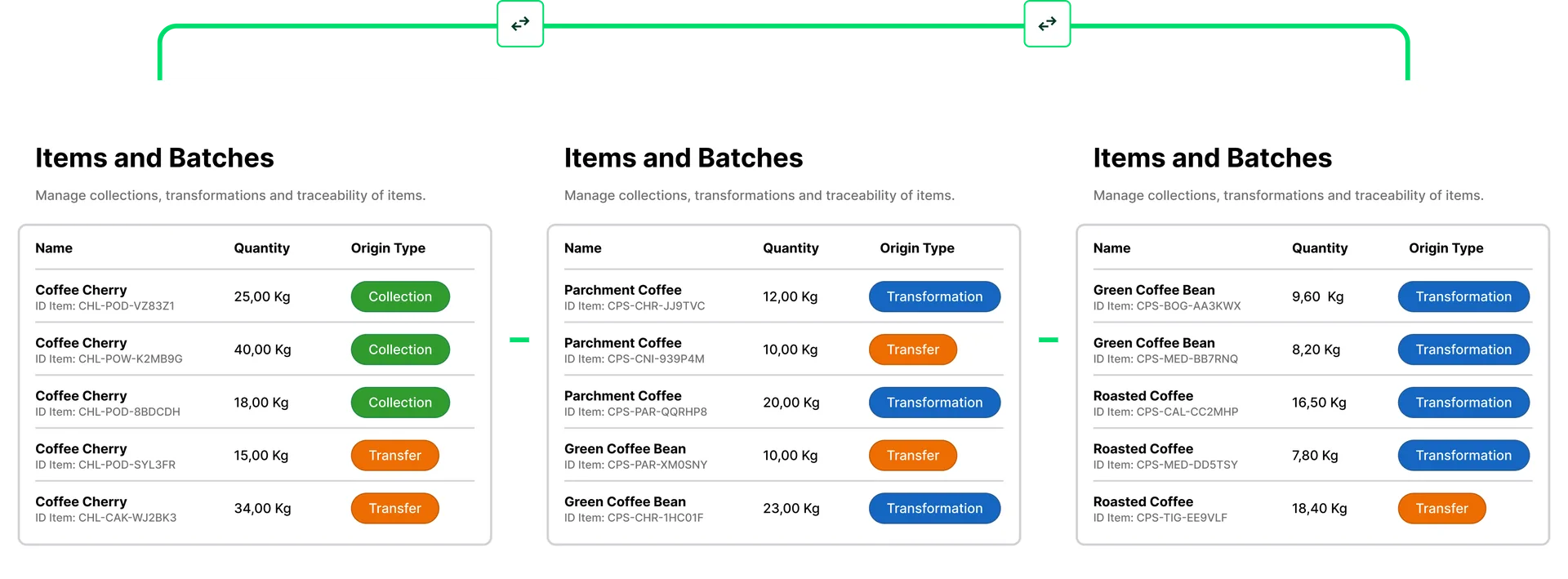
Every movement between actors is recorded with its identity intact. When the batch reaches the importer, the origin is traceable back to the farm of origin.
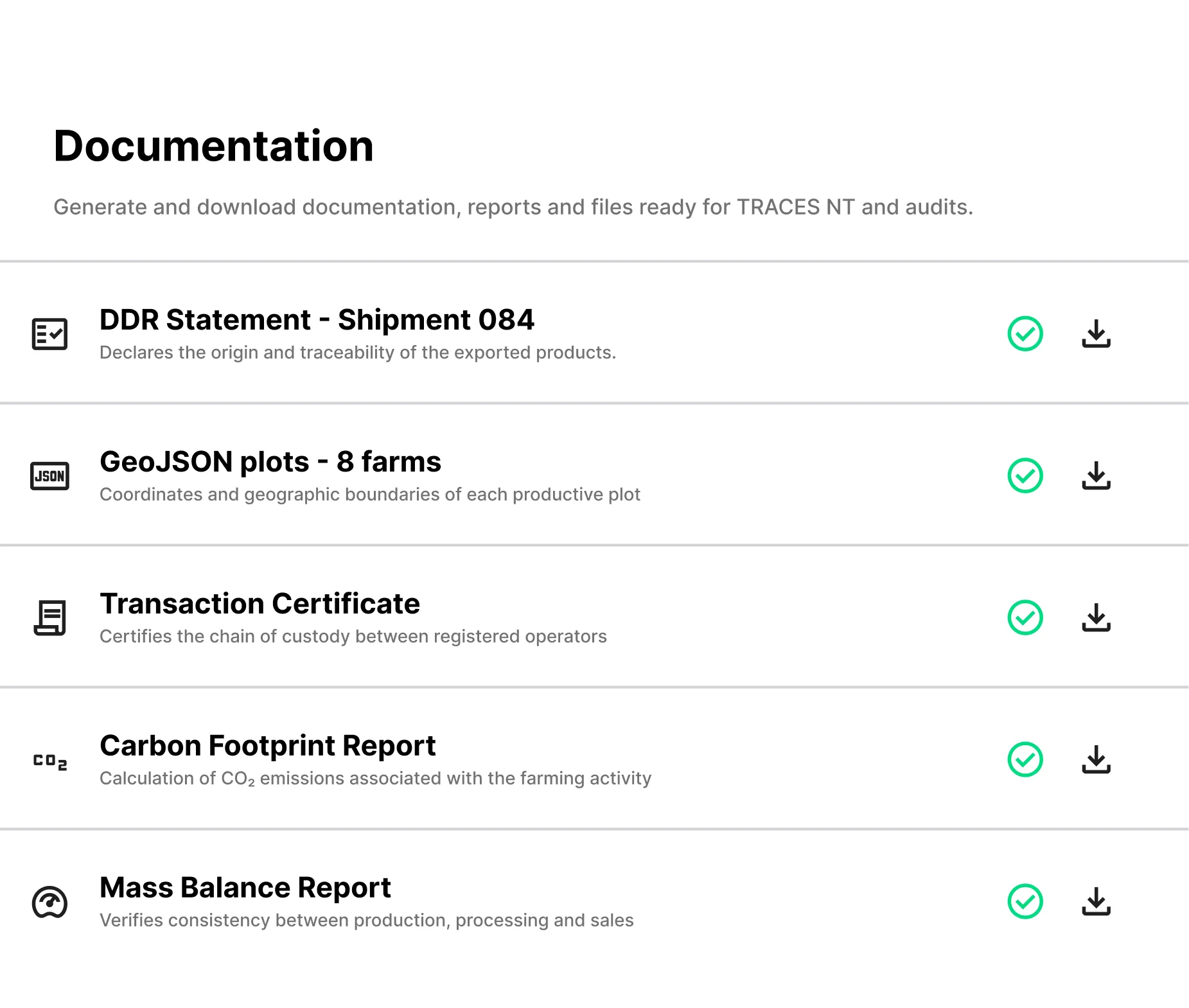
Retexcycle genera automáticamente toda la documentación que el importador necesita para presentar la DDS, se vincula de forma automática con Retexcycle Compliance Hub y se sube directamente a TRACES.
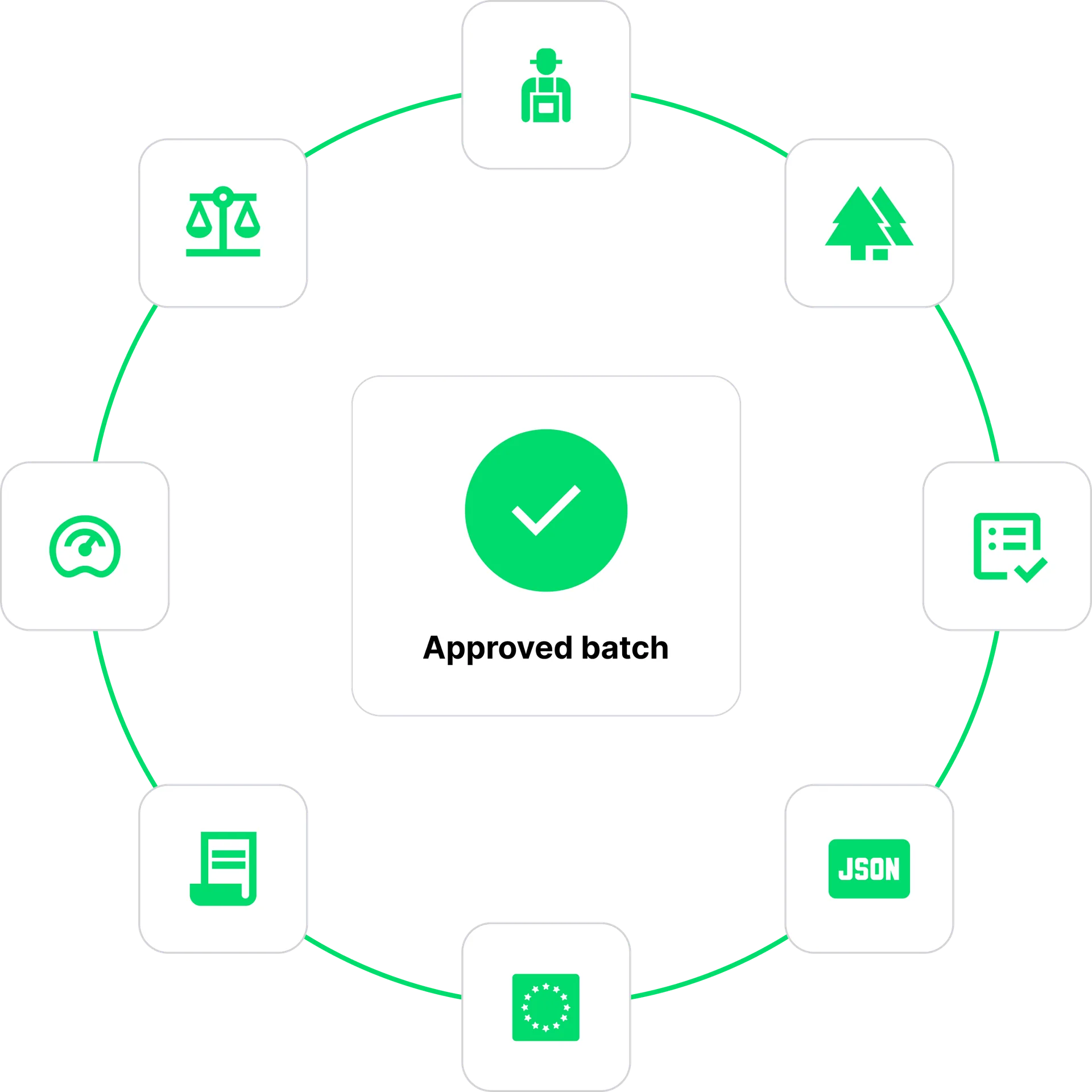
The DDS is generated from the real data of every batch, actor and geometry. Ready to submit or share with your European buyer.
Export directly in the official format. Your buyer receives exactly what they need to declare.
Plot GeoJSON, Transaction Certificate and Mass Balance Report, generated automatically and ready to download.
The technology that makes Retexcycle the traceability platform for complex supply chains.
Connect your existing systems through an open API without forcing the producer to change the way they work.
Each batch keeps its identity, attributes, location and associated events throughout the entire chain.
The platform works with the physical consistency of the commodity, not just attached documents.
Satellite layers and interactive maps turn polygons and plots into compliance-ready evidence.
AI detects alerts, land-cover changes and anomalies to anticipate risks before declaring.
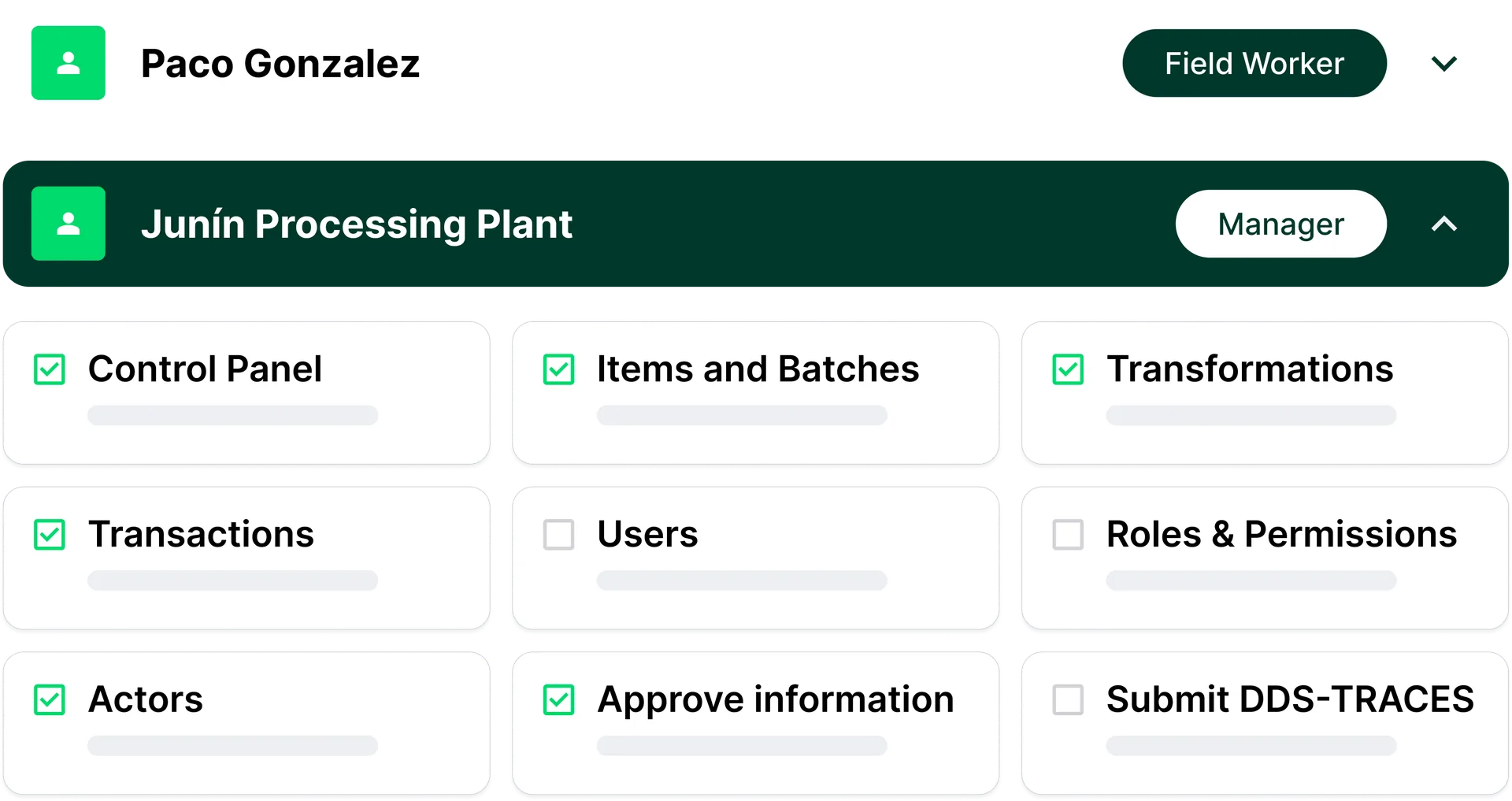
Invite your team with custom permissions. Each person sees only what they need.
Define who sees what at each link of the chain and keep control of your entire organisation with granular permissions by role and by actor.
Onboard your team, assign them to plants or distributors and control their access in real time.
Create roles tailored to your operation and decide which features each profile has available.

Every plot, batch, transformation and document is linked in a single traceable chain. What you capture at origin flows unbroken all the way to the due diligence statement.
Producer, plot and geolocation travel with the physical batch throughout the chain.
Transformations and transfers retain quantities and traceability without losing the origin.
All the connected information becomes the due diligence file with no re-capture.
Worried about regulatory compliance? With Retexcycle you generate due diligence in the required format, with linked plot, batch and geolocation data, without relying on scattered spreadsheets.
We create your workspace and give your team access.
We import producers, batches and origin traceability.
A hands-on session with your team to master the platform.
We validate results with real data before scaling.
Continuous operation with support and regular improvements.
Seven commodities: cocoa, coffee, rubber, palm oil, soy, wood and cattle, plus certain derivatives listed in Annex I. A product is only in scope if its tariff code appears in that Annex: palm oil margarine or a car's tyres, for example, fall outside it.
The Commission published a package with updated guidance, a revised FAQ and a draft delegated act adjusting Annex I: it adds instant coffee and certain palm derivatives, excludes leather and retreaded tyres, and exempts samples, packaging, waste and second-hand products. It is under public consultation, so it is advisable to check the Annex I in force before operating. It is also confirmed that there will be no further postponement.
Three steps: (1) gather information about the product, its origin and the supply chain, including geolocation; (2) assess the risk that the product comes from deforested land or was produced in breach of the legislation of the country of origin; (3) mitigate that risk where it is not negligible, until you can state with reasonable certainty that the product is compliant. Only then is the DDS submitted. Retexcycle structures all three steps by commodity and by real chain so the team reaches the end of the process with verifiable evidence.
Due diligence is exercised over all the relevant commodities the product contains, not just one. For example, a biscuit made with soy and palm oil requires tracing both chains back to the plot of origin. Each commodity needs its own coordinates, evidence and, where applicable, its own upstream reference DDS.
It depends on your position in the chain. The first party established in the EU that places the product on the market is an operator and exercises full due diligence. The exporter is an operator if it places the product on the market for the first time, or downstream if the product was already in the EU and passed due diligence; in that case it uses a specific TARIC certificate code that exempts it from providing a new reference. Traders and intermediaries keep information about their direct trading partners.
There will be two operators: the one outside and the first party established in the EU that places the product on the market, which becomes an operator under Art. 7 and must exercise due diligence and submit a DDS. This way there is always a responsible party within the EU from whom compliance can be required.
The DDS must be submitted and its reference number obtained before filing the customs declaration, both for imports (release for free circulation) and exports. A single DDS can cover several shipments and be referenced in several declarations. This is where Retexcycle helps: we organise and validate the origin data so your team reaches customs with the evidence ready and no friction.
The operator that imports or exports for the first time, and it is always responsible for ensuring it is correct. Coordinates with at least 6 decimals: polygons for plots larger than 4 ha, a single point for those under 4 ha and for cattle. GeoJSON format, within the technical limits currently in force in the information system. Retexcycle structures the capture by commodity and by real chain so that this data arrives complete and verifiable.
Five years from the placing on the market or the export. This includes the Art. 9 information, the due diligence evidence and the DDS reference numbers, made available to the competent authority upon request.
Each Member State defines them, but the maximum fine for legal persons may not be less than 4% of total EU-wide annual turnover for the previous financial year, must deprive the offender of the economic benefit obtained and increases in the event of repeat offences. Confiscations, temporary exclusion from public procurement and a temporary ban on placing products on the market within the EUDR scope may also be added.
Start with Retexcycle Origins. Capture traceability from the farm and hand your buyers a ready DDS, with no rebuilding.