En resumen, para exportador e importador por igual:
- El calendario no se mueve: 30 de diciembre de 2026 para empresas medianas y grandes, 30 de junio de 2027 para micro y pequeñas.
- El balance de masas no es válido bajo el EUDR, se haga con el cuidado que se haga: hace falta identidad preservada, lote por lote, y eso determina todo lo que viene después en este artículo.
- No resolverlo tiene coste real: sanciones de hasta el 4% de la facturación, decomiso del producto, y suspensiones de hasta 3 días laborables prorrogables mientras se investiga.
- Las medidas de simplificación reducen el coste de cumplimiento un 75%, pero ese ahorro no llega igual a todos: si mueves volumen desde un país de riesgo estándar o alto, tu carga sigue siendo completa.
- El café soluble y ciertos derivados de aceite de palma entran en el ámbito del reglamento desde el 30 de diciembre de 2027.
El problema en origen del EUDR: dónde se pierde la identidad del lote
El Reglamento (UE) 2023/1115 exige que las siete materias primas que cubre (entre ellas café, cacao, aceite de palma y caucho) demuestren, por embarque, geolocalización de origen, ausencia de deforestación desde 2020, y legalidad en el país de producción, antes del 30 de diciembre de 2026 (medianas y grandes empresas) o el 30 de junio de 2027 (micro y pequeñas). Esa evidencia nace en el origen: en la finca, en el punto de acopio, en la cooperativa.
Una cooperativa cafetera recibe la petición de su comprador europeo: necesita el expediente completo de un lote concreto, con geolocalización de cada parcela de origen, antes de que el envío pueda salir. El técnico de campo tiene los datos, pero repartidos entre un cuaderno de visitas y tres hojas de Excel distintas, una por cada recolector que aportó al lote. Reunirlo todo y consolidarlo en un documento único lleva días, no minutos. El envío espera.
Ese retraso no es casualidad. Los datos de cada parcela (quién la trabaja, cuántas hectáreas, si linda con bosque) suelen registrarse en cuadernos de campo o, como mucho, en un Excel que rellena el técnico al volver de la visita. Cuando el producto pasa por el punto de acopio, es habitual que se mezcle el de varias fincas antes de seguir camino, y es justo ahí donde se pierde lo que el reglamento exige de verdad.
Ese método de mezcla es el balance de masas, y no es válido bajo el EUDR. La actualización de las FAQ de la Comisión de abril de 2025 confirmó el fin completo de las cadenas de custodia por balance de masas, incluidas las que usan esquemas de certificación de sostenibilidad habituales en el sector. Lo que exige el reglamento es identidad preservada: que un lote concreto, sin mezclarse con ningún otro de origen distinto, pueda vincularse a las parcelas exactas declaradas, en cada paso de la cadena. Es lo que exige la regla de identidad preservada aplicada a silos y tanques compartidos por varios proveedores.
El estándar técnico exige precisión incluso a quien quiere hacerlo bien a mano: para parcelas de más de 4 hectáreas es obligatorio declarar la geolocalización como polígono, con coordenadas hasta seis decimales, y el sistema de información del EUDR solo acepta el formato GeoJSON. Cualquier otro formato se rechaza. Un Excel con coordenadas sueltas, por preciso que sea, no cumple ese requisito técnico por sí solo.
El problema en destino del EUDR: consolidar lo que ya llegó roto
Quien recibe el producto en destino, ya sea operador, operador de nivel inferior o comerciante, lo recibe ya mezclado, en el formato que cada proveedor decide usar, y tiene que consolidarlo a mano: una pestaña de Excel por proveedor, un formato distinto por cada uno, una persona que traduce todo manualmente. Es tedioso, pero es un problema derivado. El problema de fondo es anterior: si la identidad del lote se perdió en el acopio, no hay forma de recuperarla después, la reciba quien la reciba. Consolidar mejor en destino no arregla un dato que ya nació mal capturado en origen.
Cómo gestionar el EUDR: el sistema digital centralizado
Un software de compliance EUDR centralizado no sustituye la necesidad de capturar bien el dato en origen, pero cambia lo que se puede hacer con él una vez existe. Esto aplica igual si eres tú quien lo captura, o si eres quien lo recibe en destino: la digitalización EUDR no es un lujo de un solo lado de la cadena.
Con todos los proveedores y sus fincas geolocalizados en un mismo sistema, es posible monitorizar de forma continua cada parcela mediante análisis satelital, ver si hay antecedentes de deforestación, y asignar una evaluación de riesgo por proveedor y por parcela antes de aceptar el volumen. Cada lote y cada transacción quedan registrados, de forma que la identidad del lote se mantiene desde el acopio hasta el embarque, sin depender de una reconciliación manual al final del proceso.
Esta monitorización no es infalible: la precisión de los mapas satelitales más usados ronda el 85-92%, y ninguno se considera "mapa de referencia" para una autoridad competente. Un sistema digital centralizado no elimina la necesidad de investigar una alerta, pero sí permite reunir esa investigación con datos ya existentes, en vez de empezar de cero.
El expediente por embarque (certificado, geolocalización, informe de diligencia debida) existe por transacción, no se monta bajo presión cuando alguien lo pide. Y queda archivado con fecha y registro de quién verificó qué, durante los cinco años que exige la conservación documental, con los mismos plazos de conservación que exige la normativa para toda la documentación de diligencia debida.
Esto no resuelve un problema si el dato de origen nunca se llegó a capturar de forma diferenciada por parcela. Pero si el dato existe, aunque llegue en un cuaderno de campo o un Excel de un técnico, un sistema digital centralizado permite estructurarlo, verificarlo con vigilancia continua y mantenerlo trazable en vez de perderlo en la siguiente mezcla del acopio.
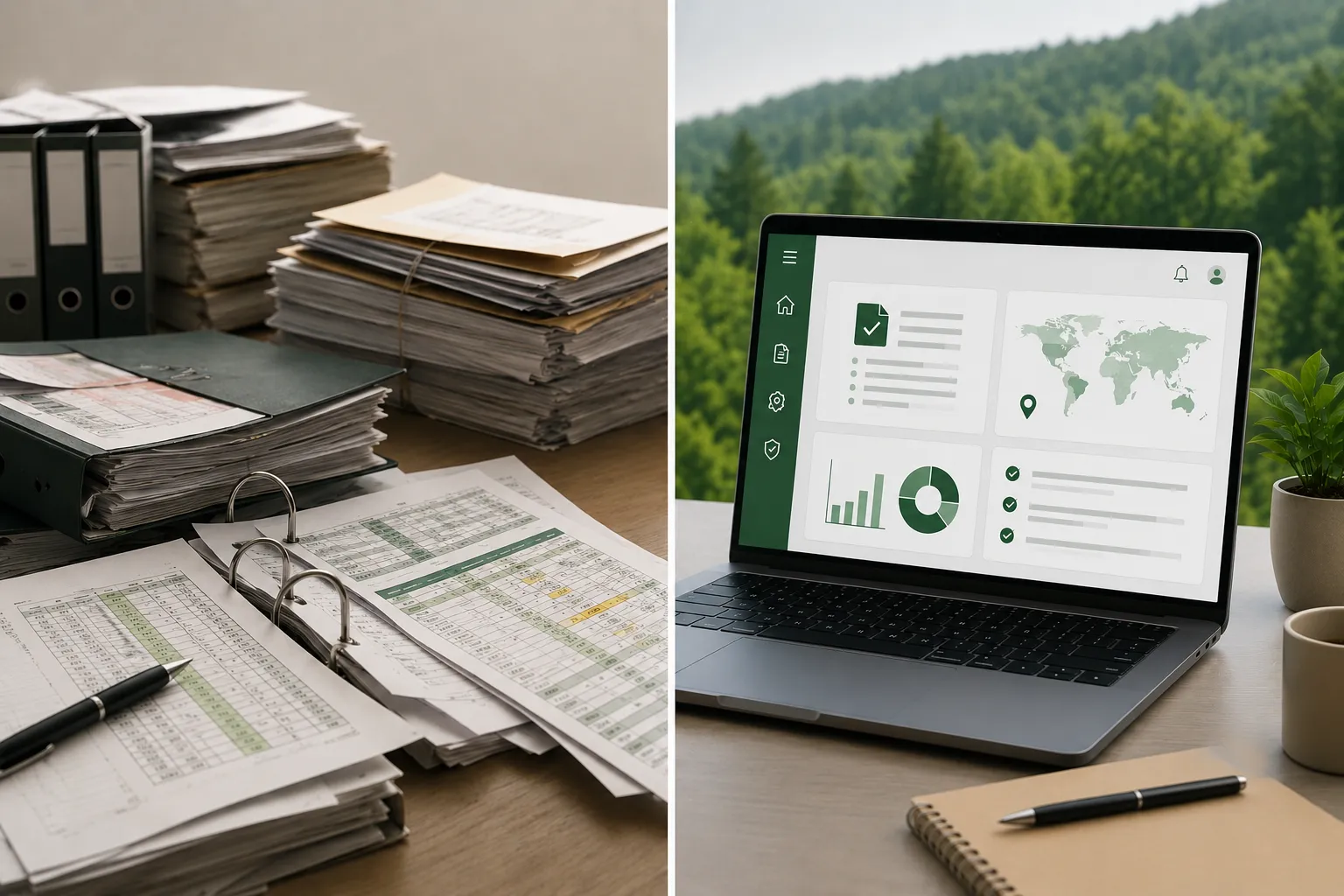
Comparación EUDR: papel y Excel vs. sistema digital centralizado
| Papel y Excel disperso | Sistema digital centralizado | |
|---|---|---|
| Dónde se pierde la identidad del lote | En el punto de acopio, al mezclar producto de varias parcelas sin registrar proporciones | Se mantiene si el dato se estructura desde que se captura |
| Formato de los datos | Cuadernos de campo, Excel sin estándar entre proveedores, coordenadas en formatos no válidos | Geolocalización en formato GeoJSON, exigido por el sistema del EUDR |
| Balance de masas | Es el método habitual, pero no es válido como prueba, se haga como se haga | No se usa; se mantiene identidad preservada por transacción |
| Vigilancia de deforestación | Depende de que alguien revise manualmente cada parcela, cuando tenga tiempo | Monitorización satelital continua por parcela |
| Responder a una petición o auditoría | Buscar el archivo correcto, en la versión correcta | El expediente ya existe, por embarque, listo para abrir |
| Conservación documental (5 años exigidos) | Depende de que nadie borre ni pierda el archivo | Archivado con fecha y registro de verificación |
| Consecuencia ante una auditoría con plazo de 3 días laborables | Riesgo real de no reunir la evidencia a tiempo, con prórrogas sucesivas del bloqueo mientras se busca | El expediente ya existe; la respuesta se prepara en minutos, no en días |
Qué hacer ante el EUDR, según dónde estés en la cadena
- Si eres exportador, cooperativa o productor: confirma que capturas geolocalización por parcela en formato válido (polígono con seis decimales si supera 4 hectáreas), y que puedes demostrar que un lote concreto no se mezcló con producto de origen desconocido en el acopio.
- Si eres importador, operador o comerciante en destino: confirma qué figura eres exactamente (operador, operador de nivel inferior, comerciante) y qué exige tu rol específico, antes de asumir que "cumplir" significa lo mismo para todos.
- Si dependéis el uno del otro, como suele pasar: hablad de qué formato de dato vais a usar antes del primer embarque, no después del primer problema. Un Excel que a origen le sirve puede no ser el que destino necesita para declarar.
Objeciones habituales ante el EUDR, y por qué no sostienen en una auditoría
"Llevamos años así y nunca hemos tenido un problema."
El EUDR es una norma nueva, con un estándar de trazabilidad física que no existía en la normativa anterior (la EUTR). No haber tenido problemas hasta ahora no dice nada sobre si el método actual aguanta un estándar que empieza a aplicarse el 30 de diciembre de 2026.
"Ya tenemos una certificación de sostenibilidad, eso debería bastar."
No basta, y no es una opinión: la propia Comisión Europea confirmó en abril de 2025 que el balance de masas de estos esquemas de certificación no satisface el requisito de identidad preservada del EUDR. Tener una certificación no exime de este punto concreto.
"Nuestro volumen es pequeño, no nos van a auditar a nosotros."
Las autoridades competentes tienen la obligación de aplicar un mínimo de controles EUDR anuales según el nivel de riesgo del país de origen, no según el tamaño de cada empresa exportadora. Si tu país de origen es de riesgo estándar o alto, el volumen de tu empresa no te protege de que te toque un control ese año.
"Cambiar de sistema cuesta tiempo y dinero."
Es cierto, y es una objeción legítima que merece comparar costes reales, no descartarse sin más. Pero el coste de seguir con el método manual también es real: consolidar a mano los datos de decenas de proveedores es un trabajo que se repite en cada embarque. Y si no reúne la evidencia a tiempo ante un control de solo tres días laborables, el coste deja de ser solo de horas de trabajo.
"No tenemos GPS ni buena conexión a internet en la finca, ¿cómo vamos a digitalizar esto?"
No hace falta GPS profesional ni conexión constante para capturar la geolocalización con la precisión que exige la norma: basta con un dispositivo móvil básico y, si no hay cobertura en el momento de la recogida, guardar el punto para sincronizarlo después.
"Todavía quedan meses, podemos dejarlo para más adelante."
El calendario es fijo desde ya, no se moverá. Montar la captura de datos en origen, formarlo con los proveedores y probarlo con envíos reales lleva más tiempo del que parece, y hacerlo con prisas en los últimos meses es exactamente cuando más errores se cuelan.
Cómo resuelve Retexcycle el cumplimiento EUDR
Retexcycle responde directamente a las objeciones anteriores, no como una promesa genérica de digitalización, sino como el mismo escenario del inicio resuelto de otra manera. Funciona igual para exportador e importador. Así funciona, paso a paso:
Step 1. Con Retexcycle Origins, cada productor y su parcela se registran y verifican en origen, con análisis de riesgo de deforestación y documentación legal adjunta, sin necesidad de GPS profesional ni conexión constante.
Step 2. Cada recogida se captura en el punto de acopio con geolocalización precisa, vinculada a un código alfanumérico único, en el momento en que ocurre, no reconstruida después en un Excel.
Step 3. Ese código se enlaza con otros nuevos en cada mezcla, transformación o envío, así que la identidad preservada no se rompe entre el acopio y el embarque, ni aunque el lote pase por varios recolectores o intermediarios.
Step 4. Con Retexcycle Compliance Hub, ese expediente llega ya estructurado al operador o comerciante en destino, listo para su declaración.
Con este proceso, la cooperativa del ejemplo inicial no habría tenido que reunir nada bajo presión. Y su comprador europeo tampoco: el expediente de ese lote ya habría existido antes de que nadie lo pidiera.
Para decidir sobre tu cumplimiento EUDR, responde a esto
Todo lo anterior se reduce a tres preguntas, las capture quien las capture: tú en origen, o tu comprador en destino. Si vas a llevar esta decisión a tu equipo o a un superior, son estas:
- ¿Puedes reunir el expediente completo de un lote concreto en menos de tres días laborables, sin avisar con antelación? Es el plazo real que da una autoridad antes de prorrogar o levantar una suspensión.
- ¿Tu evidencia depende de que nadie pierda un Excel o un cuaderno de campo? Si la respuesta es sí, no es una cuestión de si fallará, sino de cuándo.
- ¿Sabes exactamente cuánto cuesta, en horas, consolidar manualmente cada envío? Si no lo sabes, es probable que sea más de lo que crees, y se repite en cada embarque, no una sola vez.
Si alguna de las tres respuestas te preocupa, es el momento de valorar un software de trazabilidad EUDR centralizado en vez de seguir parcheando el método manual. Puedes request a demo with your own data y comprobar cómo quedaría tu cadena, desde la parcela hasta la declaración.